
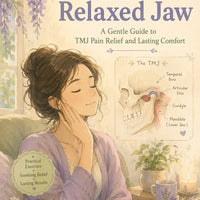
Unlock a Relaxed Jaw: The TMJ Myofascial Release Protocol
KITTEN REALM SCIENTIFIC INSIGHT
Your jaw clicks. Your temples throb. You wake up with a dull ache that fades by noon. You've been told it's "just stress" — and maybe you've tried a night guard, ibuprofen, or hoping it goes away. It hasn't.
Here is what's actually happening. The masseter — the strongest muscle in your body for its size — is in spasm. Trigger points in the temporalis are referring pain behind your eyes, mimicking sinus headaches. The lateral pterygoid is pulling your TMJ disc forward, creating that click every time you open. Forward head posture is adding ten pounds of strain to your neck for every inch your head drifts forward of your shoulders. And the pain-spasm-pain cycle — trigger points causing pain, pain causing protective contraction, contraction causing more trigger points — has been running on autopilot for months or years.
Most people treat the symptom. This guide treats the mechanism.
Unlock a Relaxed Jaw is a clinical self-treatment protocol built on myofascial release and physical therapy principles. Twelve exercises. Four progressive phases. No gimmicks. Just anatomy you can understand, trigger points you can find, and techniques you can do at home.
WHAT'S INSIDE
PART I — UNDERSTANDING YOUR JAW: Plain-language anatomy of the TMJ, masseter, temporalis, and pterygoids. The bruxism-clenching-posture pain cycle. Trigger point referral patterns — why your jaw pain shows up in your ear, your teeth, or behind your eye.
PART II — THE 12-EXERCISE PROTOCOL:
Phase 1 (Release): Resting position. Masseter self-massage. Temporalis self-massage.
Phase 2 (Stretch): Controlled jaw drop. Lateral glide. Chin tuck posture correction.
Phase 3 (Mobility): Mirror-guided opening. Resisted opening/closing.
Phase 4 (Integration): Tongue-up hold. Gentle yawn. Progressive relaxation body scan.
PART III — LIFESTYLE MODIFICATIONS: Sleep posture (stomach sleeping is the worst). Soft food reset. Daytime clenching check-in practice. When to see a TMJ dentist, PT, or orofacial pain specialist.
APPENDICES: Daily Practice Log. Pain & Symptom Tracking Sheet. Trigger Point Location Guide (masseter, temporalis, SCM). Quick-Reference Exercise Card — print, cut, carry.
THIS IS FOR YOU IF:
▸ You wake up with jaw pain or temple headaches
▸ Your jaw clicks, pops, or deviates when you open
▸ You've been told you clench or grind
▸ You want to try conservative treatment before a night guard or specialist
THIS IS NOT FOR YOU IF:
✗ Your jaw locks open or closed — see a professional
✗ You have severe, worsening pain — this is self-care, not emergency treatment
Customer Reviews
See why hundreds love this product and trust us.